
- Clear aligner treatment in Bahrain
Invisalign in Bahrain
A discreet way to straighten teeth, starting with the right assessment
Interested in straightening crowded, spaced or uneven teeth without fixed metal brackets? Invisalign uses a series of custom-made, clear removable aligners to move teeth gradually under a clinician-led plan.
At Damas Medical Center in Bahrain, your journey begins with an assessment of your teeth and bite, helping your orthodontist recommend Invisalign or another suitable approach.
- Clinician-led orthodontic assessment
- Clear, removable aligners
- Progress reviews and retention planning
Invisalign provider designation
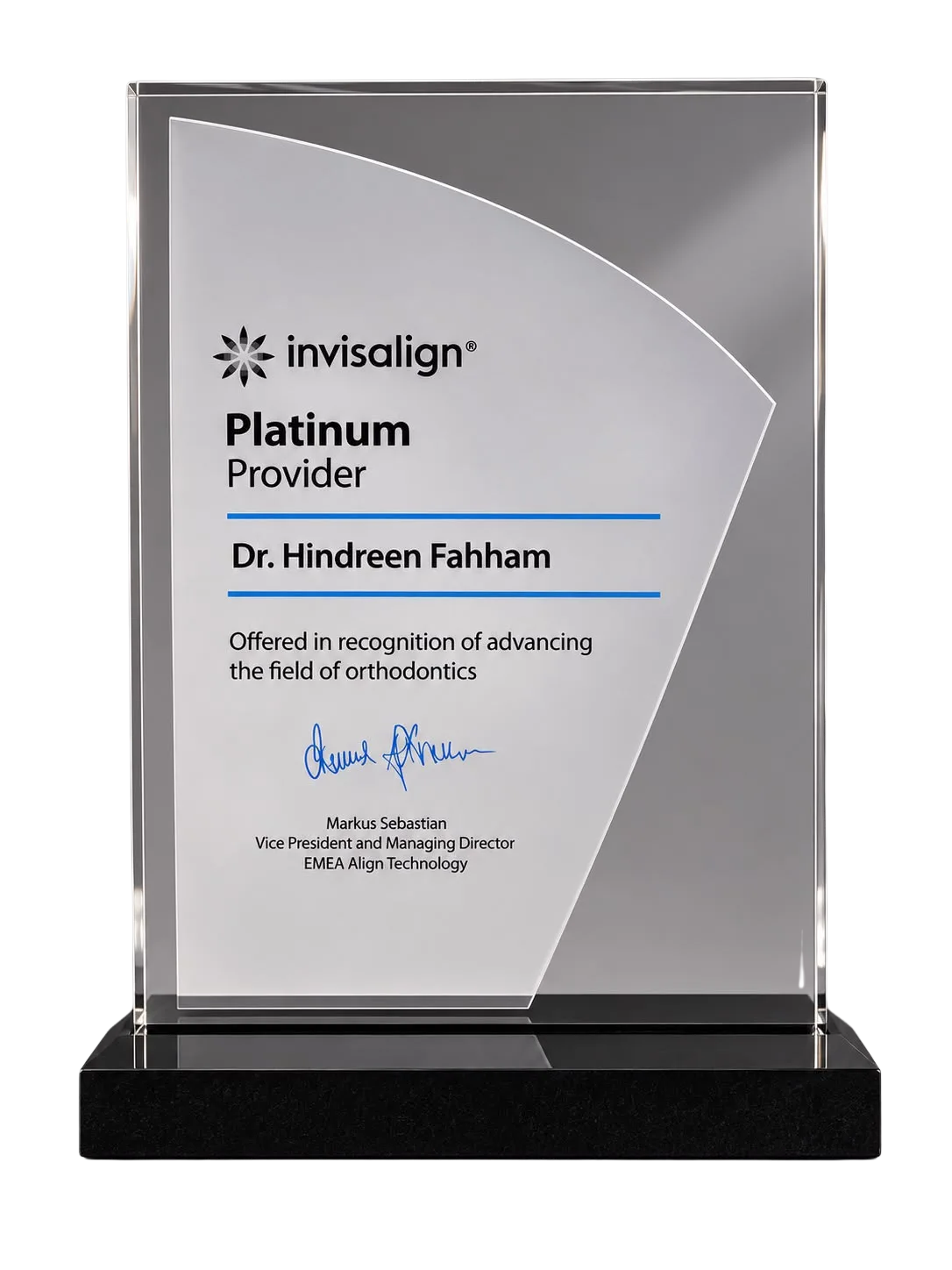
Damas Medical Center holds Platinum status for Invisalign treatment
- What to know
What is Invisalign, and how does it work?
Invisalign® is a specific brand of clear aligner orthodontic treatment. A series of aligners is made for your teeth, guided by a treatment plan that maps the movements required. You change aligners in stages as instructed and attend reviews so your clinician can monitor progress.
The aligners are less noticeable than conventional metal brackets and can be removed for meals and oral hygiene. They still require consistent daily wear. Tooth-coloured attachments or additional procedures may also be needed, depending on your case.
- Your assessment may include dental imaging, records or scans where indicated.
- A retainer is needed after active treatment to help maintain alignment.
- Is it for you?
Could Invisalign work for your teeth?
Invisalign can be considered for a range of orthodontic concerns, but suitability depends on the complexity of the problem, jaw relationships and oral health—not just a photograph of your smile.
When teeth overlap or there is not enough space for ideal alignment.
Suitability depends on the degree of crowding.
When spaces affect the way teeth fit together or look.
The cause of spacing may need investigation.
When front teeth need specific positional changes.
Visible appearance alone cannot define the plan.
Examples include open bite and reverse bite, where the upper and lower teeth do not meet as expected.
Your orthodontist will assess whether Invisalign is appropriate.
For example, a retrusive lower or upper jaw.
A specialist assessment is needed to determine an appropriate treatment approach.
- From consultation to retention
Your Invisalign journey at Damas
You do not need to choose an appliance from an advertisement. A clear diagnosis and realistic treatment discussion come first.
Your orthodontist explains the planned tooth movements and estimated treatment duration. You can view and discuss a digital preview of the expected result before treatment begins. Aligners are then prepared according to the agreed treatment plan.
- Everyday wear and care
Living with Invisalign aligners
Removability gives you flexibility, but progress depends on following the daily routine.
- Wear them consistently
Aligners are typically worn for 20–22 hours a day, subject to your clinician’s instructions.
Frequently leaving them out can affect progress. - Remove them for meals
Take aligners out before eating or drinking anything other than water, then clean your teeth before reinserting them.
Avoid hot drinks while wearing aligners. - Clean and store them
Clean your aligners as instructed, keep them in their case when removed and avoid hot water.
Ask your clinician about suitable cleaning products.
- Compare your options
Invisalign or fixed braces?
Both approaches can straighten teeth. What differs is how they work day to day and which tooth movements they can manage.
| Consideration | Invisalign aligners | Fixed braces |
|---|---|---|
| Appearance | Clear and relatively discreet | Brackets and wires are more noticeable |
| Removal | Removed for eating and cleaning | Remain attached to teeth |
| Daily commitment | Need consistent wear throughout the day | Do not rely on remembering to wear an appliance |
- Before you book
Treatment time and cost
- How long does Invisalign take?
Treatment time depends on how much movement is needed, the complexity of crowding or spacing, biological response and how closely you follow the prescribed wear schedule. Your clinician can provide an estimate after assessment, although plans can change during treatment. - How much is Invisalign in Bahrain?
Pricing reflects case complexity, the aligner stages required, follow-up care and any additional steps. When reviewing a quotation, ask what is included for records, aligners, appointments, potential refinements and retainers.
- A clinical decision first
Why start with an orthodontic assessment at Damas?
Damas Medical Center provides orthodontic services, and Invisalign is listed among the options in the centre’s brochure. Your treatment recommendation should follow a review of tooth alignment, gum health and jaw relationships, not simply a preference for clear trays.
If Invisalign is not the most appropriate choice, your clinician can discuss fixed braces or other options. Explore orthodontic treatment at Damas.
What you can discuss at your visit
Understand your plan before you begin
- Teeth, gum and jaw assessment
- Invisalign suitability versus other options
- Expected stages and follow-up
- Costs and what the plan includes
- Straight answers
Frequently asked questions about Invisalign
Is Invisalign the same as any clear aligner?
No. Invisalign is a specific brand of clear aligner treatment, not the generic name for every clear aligner system.
How many hours should I wear Invisalign?
Usually around 20–22 hours daily, following your clinician’s instructions. Remove the aligners for meals and oral hygiene.
Can I eat while wearing my aligners?
Remove your aligners for meals and drinks other than plain water. Clean your teeth before putting them back in.
Does Invisalign hurt?
You may feel temporary pressure or tenderness when you begin a new set. Contact your clinician if pain is severe or persistent.
Is Invisalign suitable for every orthodontic case?
That depends on your orthodontist’s assessment of your individual case.
Will I need a retainer after Invisalign?
Yes. Retention is normally required after orthodontic treatment. Your clinician will recommend the retainer and wear schedule.
Will I need attachments on my teeth?
Inflammation can recur when plaque returns or risk factors are not controlled. Daily oral care and a dentist-recommended maintenance schedule are important.
How much does Invisalign cost in Bahrain?
The cost varies with complexity and the treatment plan. Book an assessment to discuss options and the proposed cost for your case.
- YOUR NEXT STEP